A Visit to a Chinese Laser Cutter Factory
Or how I ended up with way more laser cutter than I intended, and made friends on the way
For several years during the 2010’s, every time I visited China I ran into this guy, Daniel, who was introduced to me by a mutual acquaintance as the owner of a laser cutter company. I wasn’t particularly interested in laser cutters at the time, so we didn’t have a whole lot to talk about. But we kept finding ourselves at the same conferences.
Then I started working on a new book, How Things Work, for which I decided I wanted to photograph models of various mechanical devices. After rejecting 3D printers as ugly, I settled on laser cut acrylic as the method I was going to use. At which point I remembered that I apparently knew a guy who had a laser cutter company.
Without knowing anything about the company, I emailed Daniel and said I was interested in a small laser cutter, nothing fancy, and did he have any suggestions? He immediately offered to sell me any of his company’s machines for a good price, with free shipping thrown in! Well, that sounded like too good an offer to pass up, so I looked at their website.
Well, um…what I had in mind was a small desktop thing, and it turned out his company didn’t make small desktop laser cutters. They made mostly very large fiber laser machines which I could not possible justify, let alone find space and power for in my studio.
In the end Daniel’s offer was just too good to turn down, so I ended up with their very smallest (130W) CO2 laser cutter—which is roughly the size of a baby grand piano. I have never been happier about any tool-related decision in my life.
It turns out that owning what is really quite a large laser cutter (on the hobby-use scale), is an amazing experience. It completely changed my relationship to making a lot of things. In the roughly ten years I’ve had the machine, I have three times described it in print as my favorite tool ever, out of the hundreds of tools I’ve used over my life. (I said this once in my own Tools book, and twice in a book series that asks people what their favorite tools are.)
I have since gotten to know Daniel quite well, and have visited his factories, first in Beijing, and most recently his new, larger factory about an hour south of Shanghai. I want to tell you about this place, because I think it’s a really interesting story about what you might call the new China.
A word about China
But first a bit about China in general, starting with the fact that there is a city called Chongqing (pronounced Chong-Ching) which you, if you are a typical American, have never heard of it. At least no American I’ve asked so far has heard the name.
Chongqing is the largest city in the world, measured by geographical area. It has a population of 32 million. That might sound like a lot of people, until you realize that it is nearly ten percent of the entire population of the United States, all living in one city. Then it sounds like a completely bonkers number of people.
What do these 32 million people do? They make stuff. Chongqing is responsible for the better part of the world’s output of laptops and motorcycle parts, for example.
Here’s another remarkable fact about Chongqing. In three days there, staying in an “international” hotel, visiting tourist areas, industrial areas, markets, and the airport (twice, naturally), I never once saw another western-looking person. Not one, and after the first day I was paying attention to see if I could spot one.
While we in America are going about our business not knowing that Chongqing exists, they are doing the same, going about their business not caring much about us. And they’re doing just fine building the future on their own.
During another visit in 2008 I wrote about being in China during the devastating Sichuan earthquake. In that essay I talked about how much work China had put into modernization, compared to earlier visits. This impression was of course skewed by the fact that I was in Beijing just a few months before the Olympics would be held there, so there had been a massive infrastructure investment that was just then coming together—very impressively.
I said China was “working on putting together a world-class country”. Well, here we are eighteen years later and it’s game over. China, in its developed mega-cities, is not a world-class country, it is the world-class country. No one else is operating at this level, and at this scale. The US has been lapped in so many ways it’s not even funny.
We have google maps? That’s cute. Their maps program knows when each stop light is going to change, and displays a countdown timer on your phone. The stop lights meanwhile have evolved beyond yellow lights. The middle light is now a countdown timer, which makes so much sense if you have an infinite supply of LEDs and a budget for infrastructure investment. And while we’re on the topic of what you can do with LEDs, why not have the tail light of your electric car display the charging time while it’s plugged in?
The future is not all roses. Ten years ago the hotel industry in China was in the grip of a collective insanity: having a clear window, often with not even a curtain, between the bathroom and the bedroom. This was as impossibly awkward as it sounds. The windows are still there, but now, in my sample of three, they are tastefully frosted. It made me feel so…concealed.
Sadly the ever-insecure hotel industry now appears to be in the grip of another fad: Light switches based on that special flavor of arrogant indifference to function that led Tesla to make you use a touch screen to open the glove compartment. The worst light switch I’ve ever seen required navigating several screens on a small touch panel, all in Chinese, to turn on or off a given light. I had to use my camera translation app to turn off the lights at night and then wait for the first light of the morning so the translation app could show me how to turn them back on.
Having said that, I observed the bellhop in one hotel speaking harshly to the lights, so maybe the idea is that you don’t have to use the stupid touch screen. This I approve of, and indeed I often find myself in an old-man-yells-at-the-lights scenario in my own studio. However, I did not catch their name, and I don’t think the hotel lights speak any more English than I do Chinese. Presumably in a few years they will be back to switches you can flip off as well as yell at, much as Teslas will be replaced by cars with a real button to open the glove compartment.
Back to the Laser Cutters
Now I’d like to get to the actual reason for my visit to China: visiting Daniel’s laser cutter factory.
Shortly after arriving at the GUEagle factory south of Shanghai, I understood why my friend, and its president, Daniel Hu hadn’t even tried to describe it. I wouldn’t have believed a word of it.
Daniel’s company makes big laser cutters. At the time of my visit, they were assembling one with a 40-foot bed for a customer in Mexico. (What comes out of their factory mostly goes into other factories in China, in the US, and elsewhere in north, south, and central America.) But the scale of their machines isn’t what I would have been incredulous of.
The GUEagle factory is located within the same industrial park, and shares both space and a certain spirit, with a larger company called Knada, which manufactures the cabinets and other large structural components of GUEagle’s laser cutters.
There are highly automated factories in every country, including the US. Purely in terms of the sophistication of its factory automation—the gorgeous robotic sheet goods inventory system, for example—the GUEagle/Knada factory is high-end, but not unique. The facilities are large, well-organized, clean, and pleasant to walk through. I lust for something with one tenth the capacity of their four-story, ten-ton gantry crane. But it’s the humanity of the place that really stands out.
How many factories have attractive garden fences with potted plants at regular intervals, as the safety railings around rows of bus-sized CNC milling centers and 20KW fiber laser cutters? And a space-ship-style tiny house by one of the two party boats docked in the company pond? And a vast fruit and vegetable plantation on the roof, surrounding the massive air filters that clean the air from the cutting, powder coating, sand blasting, etching, anodizing, and plating lines?
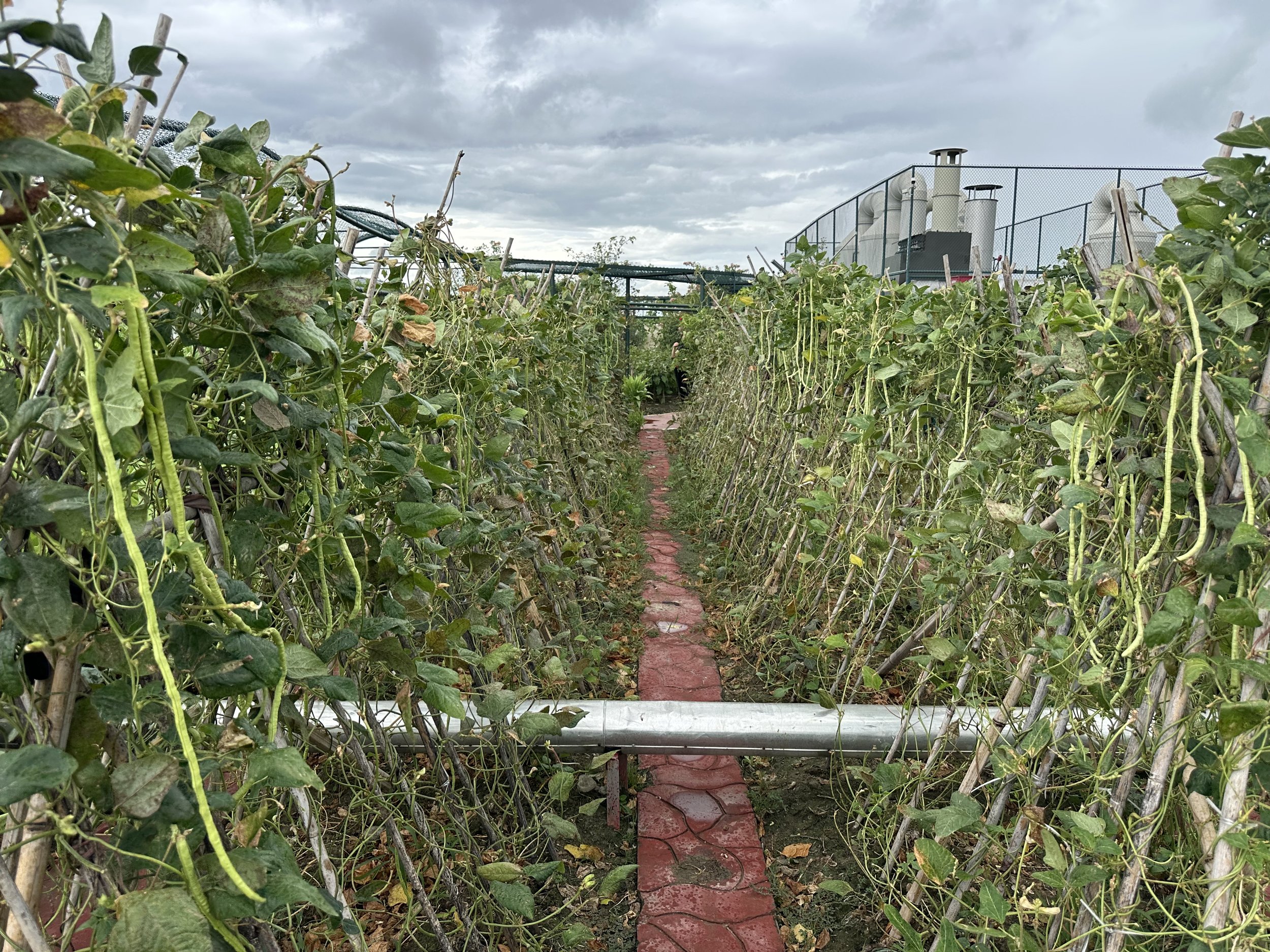
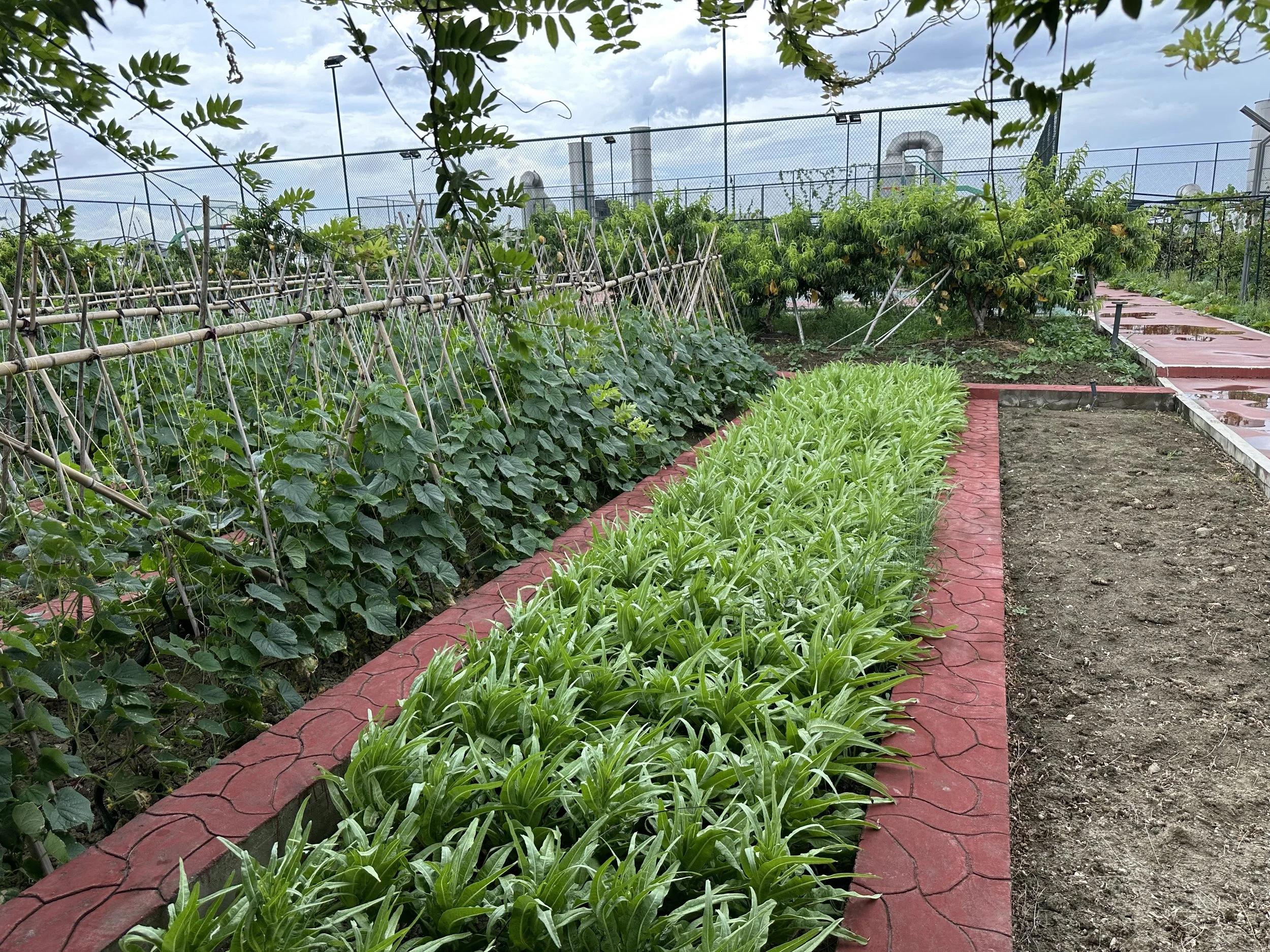
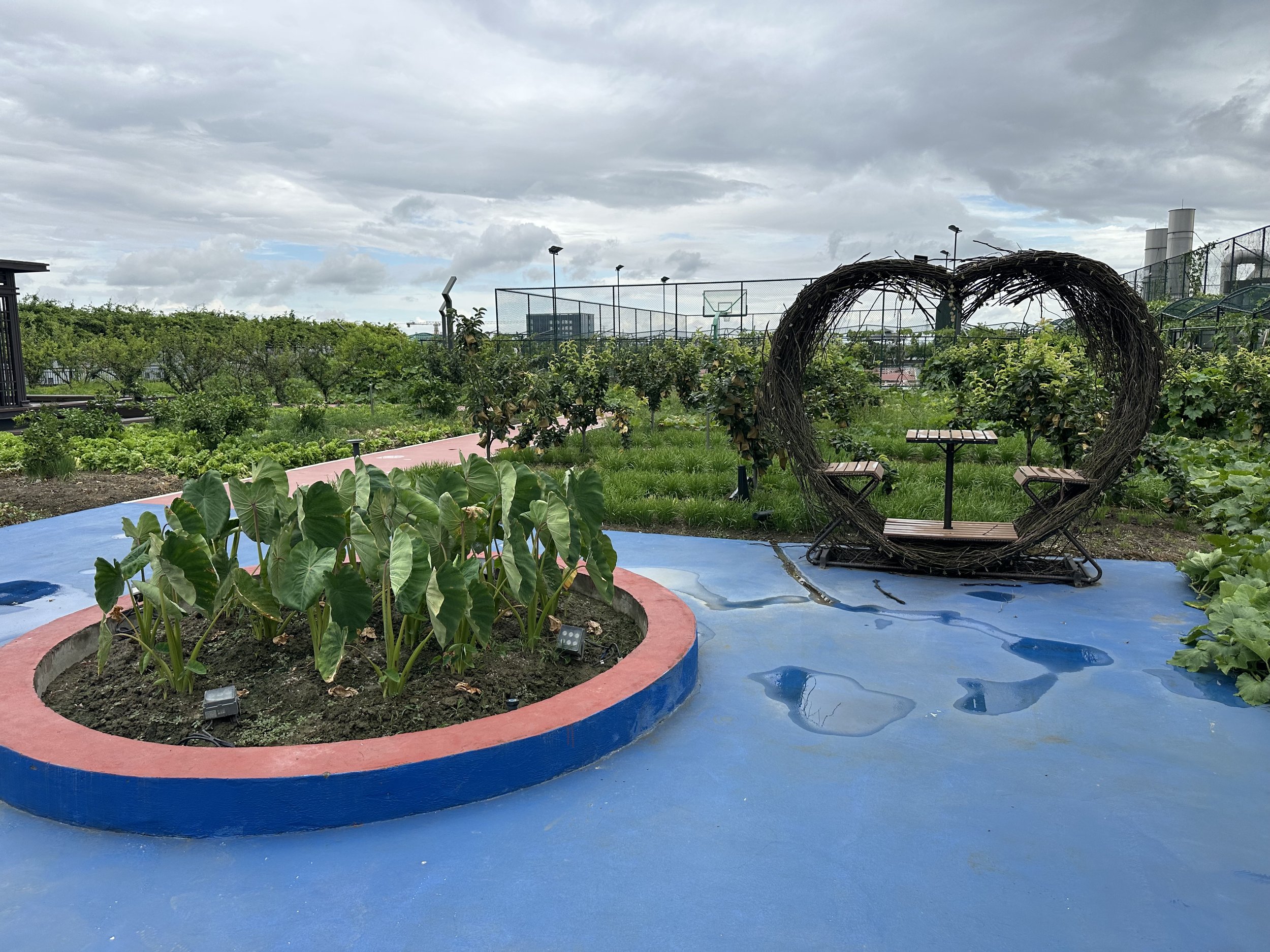
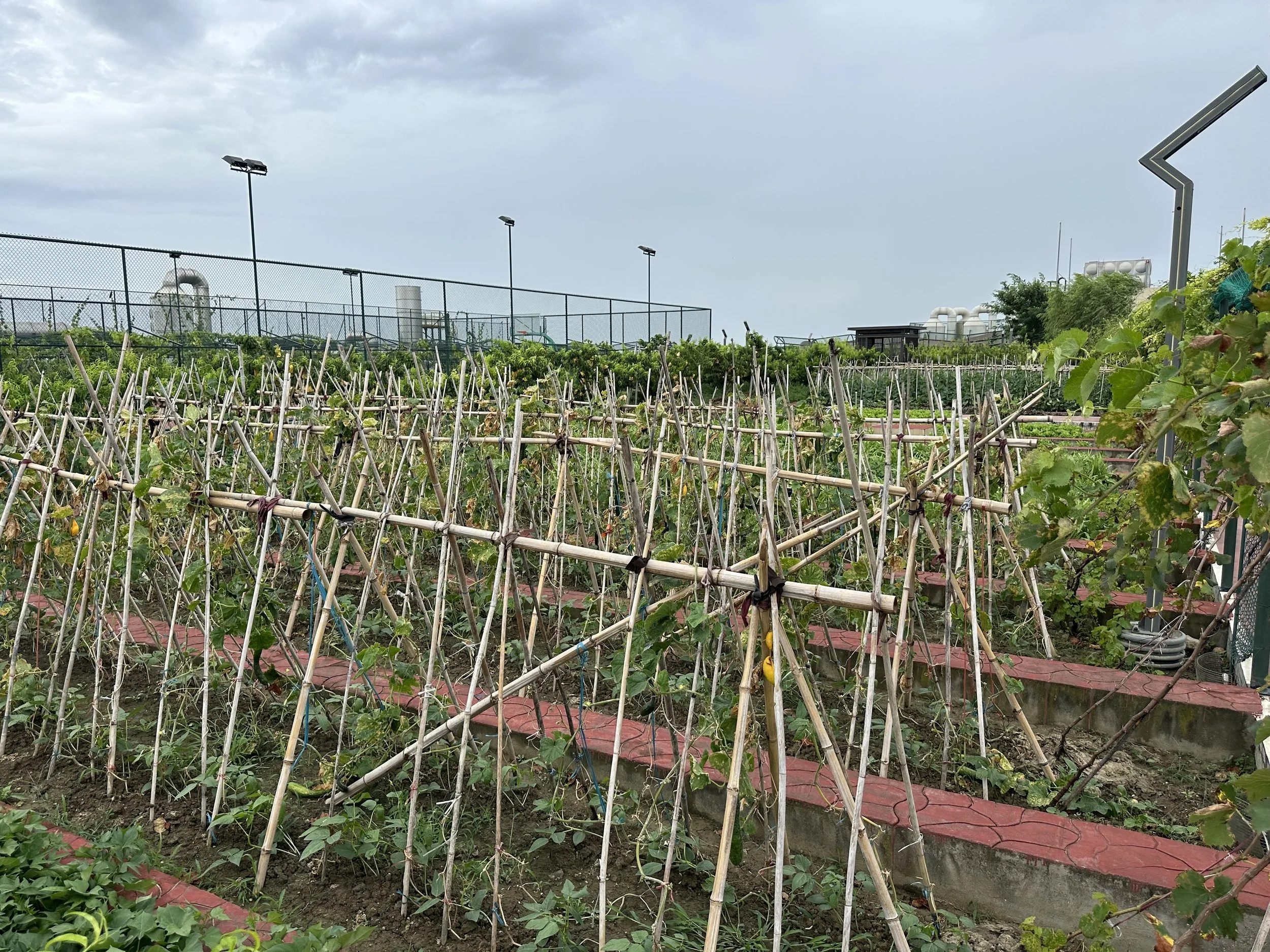
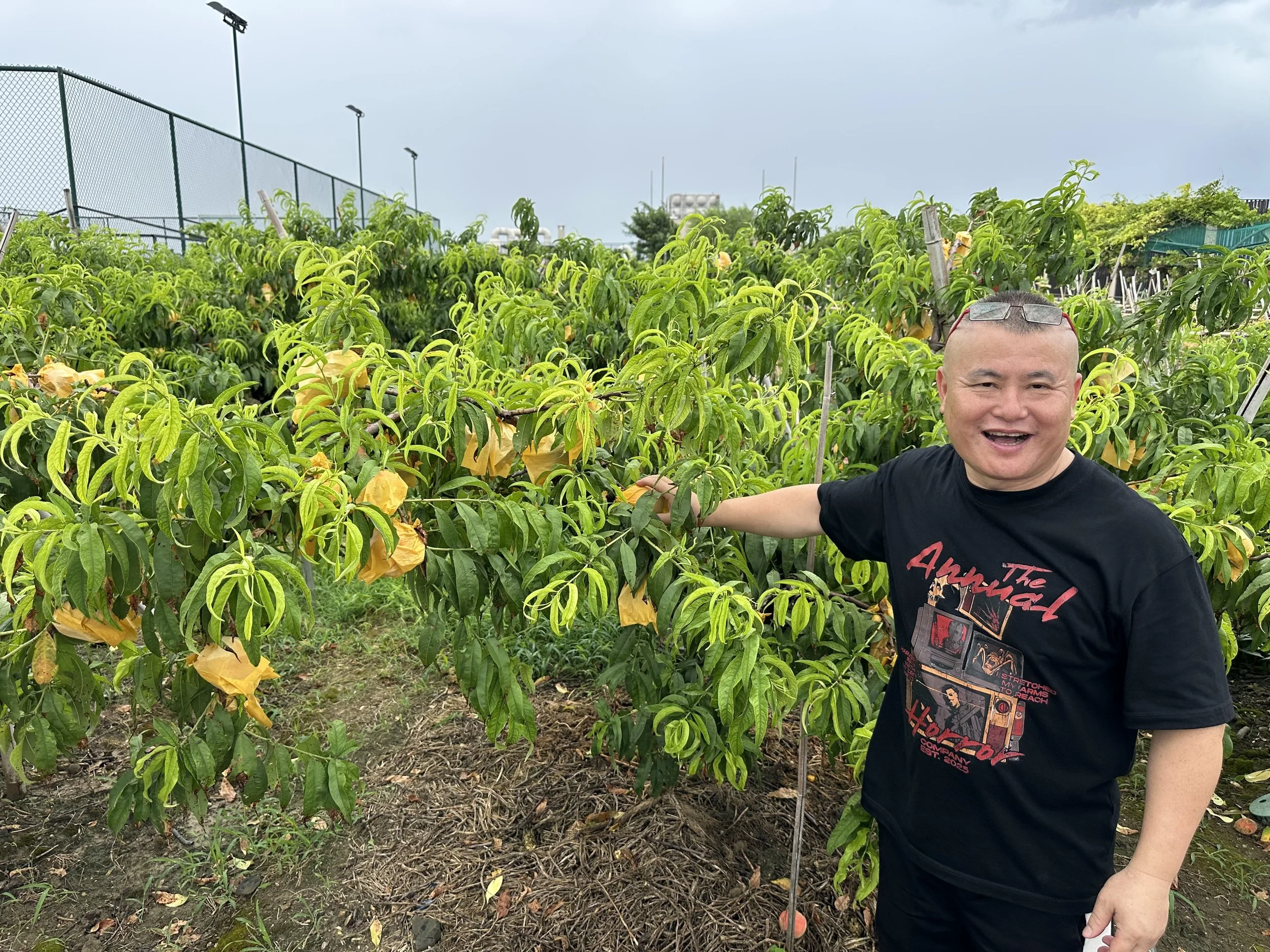
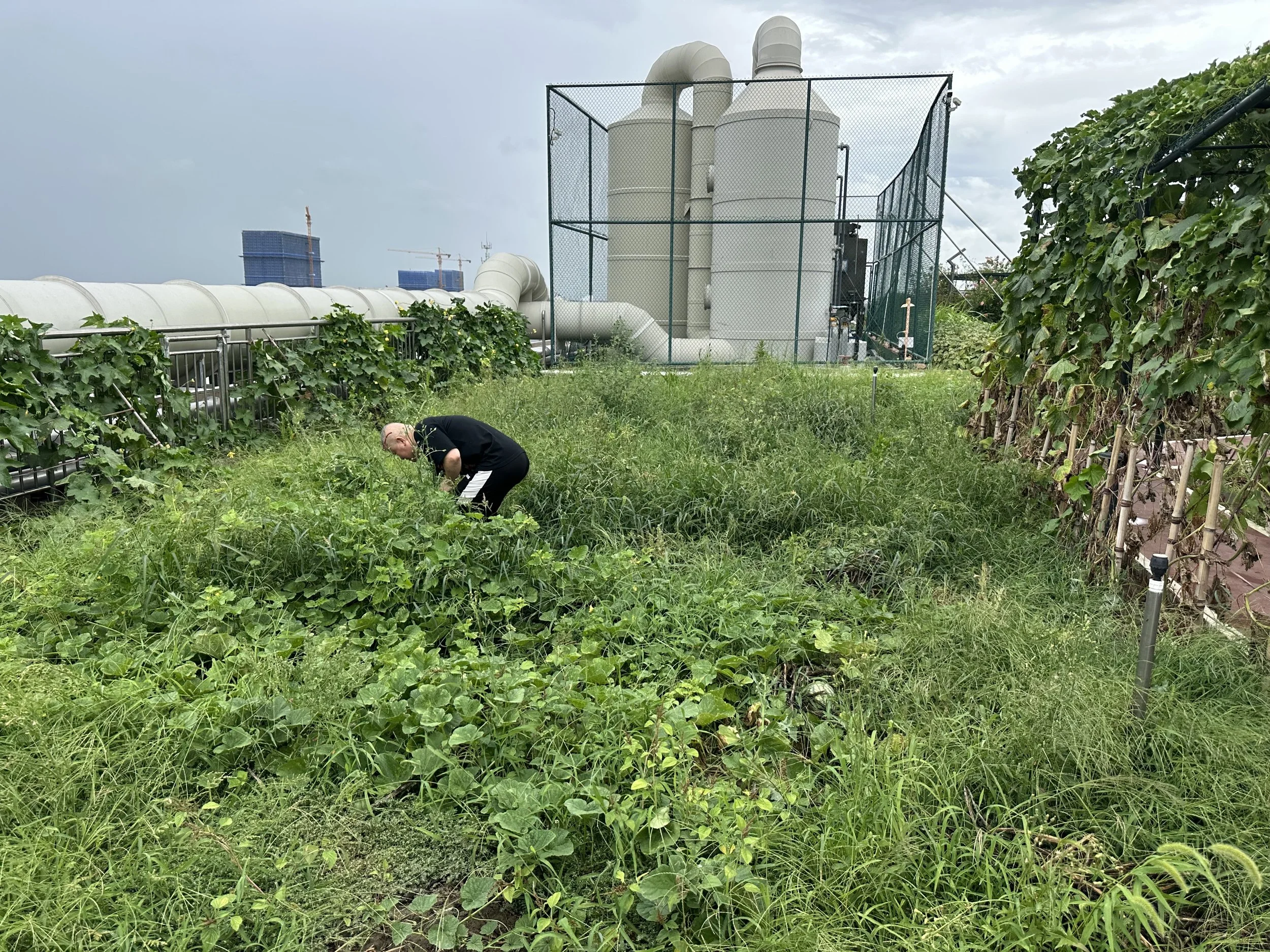
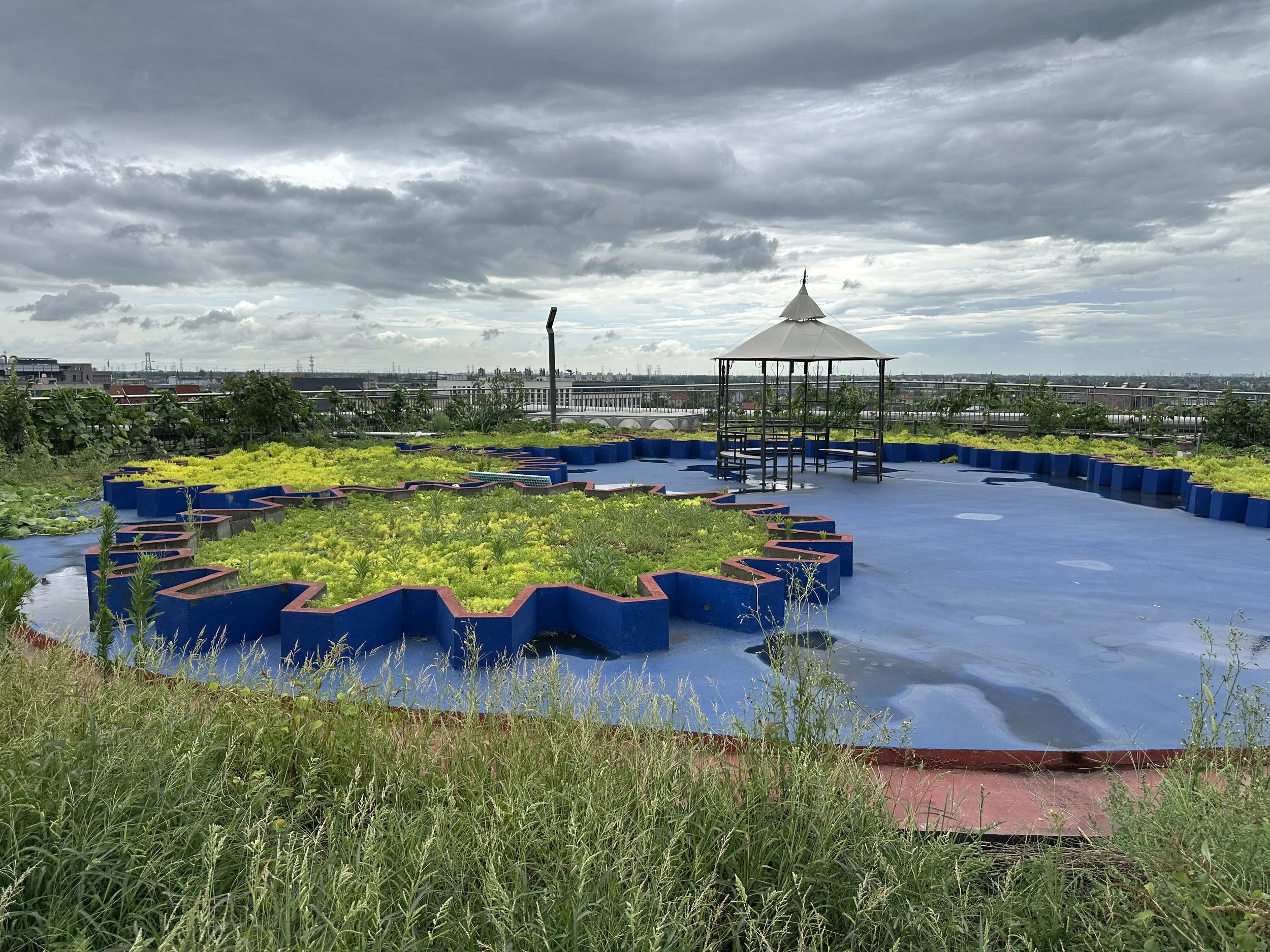
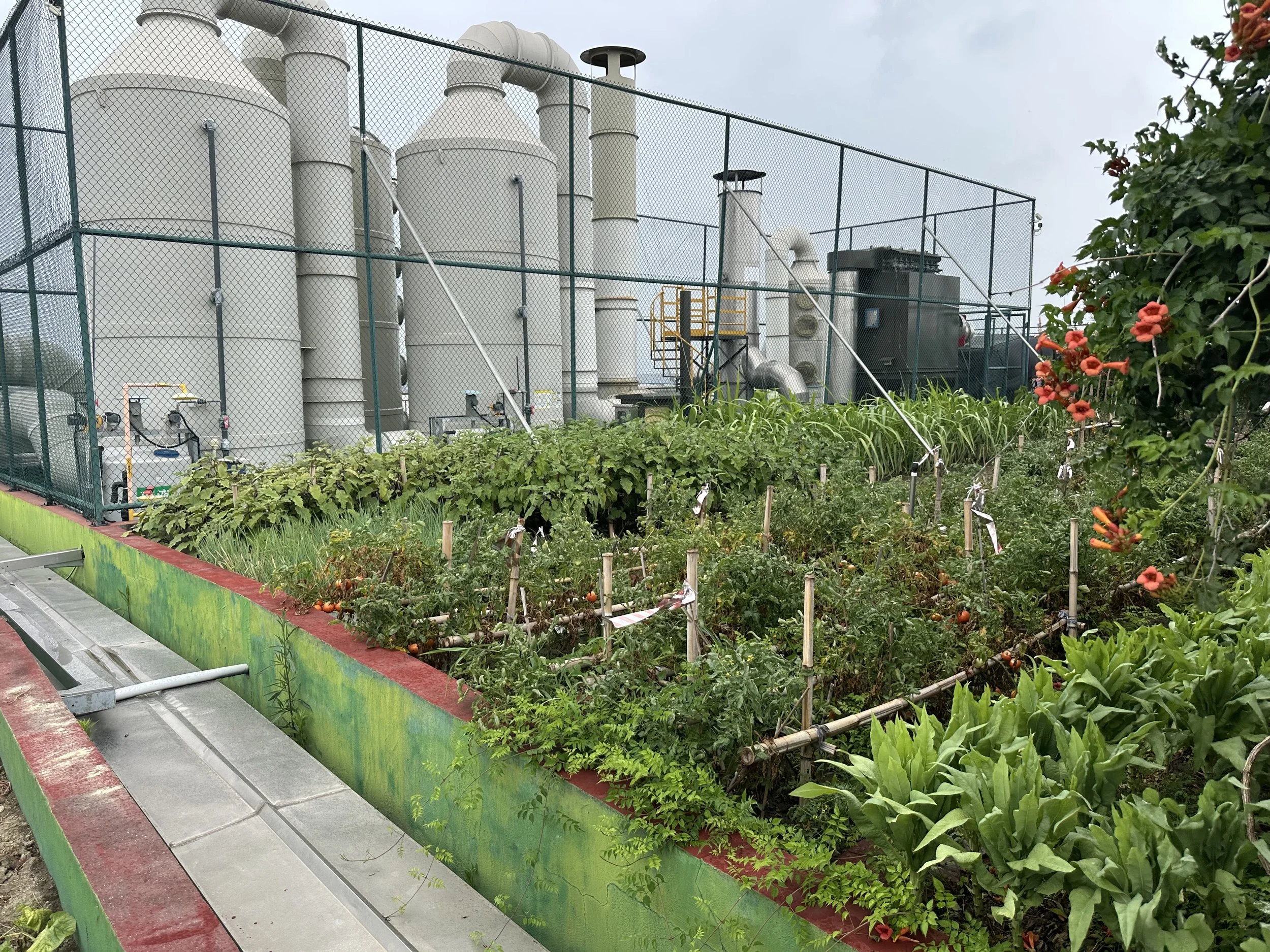
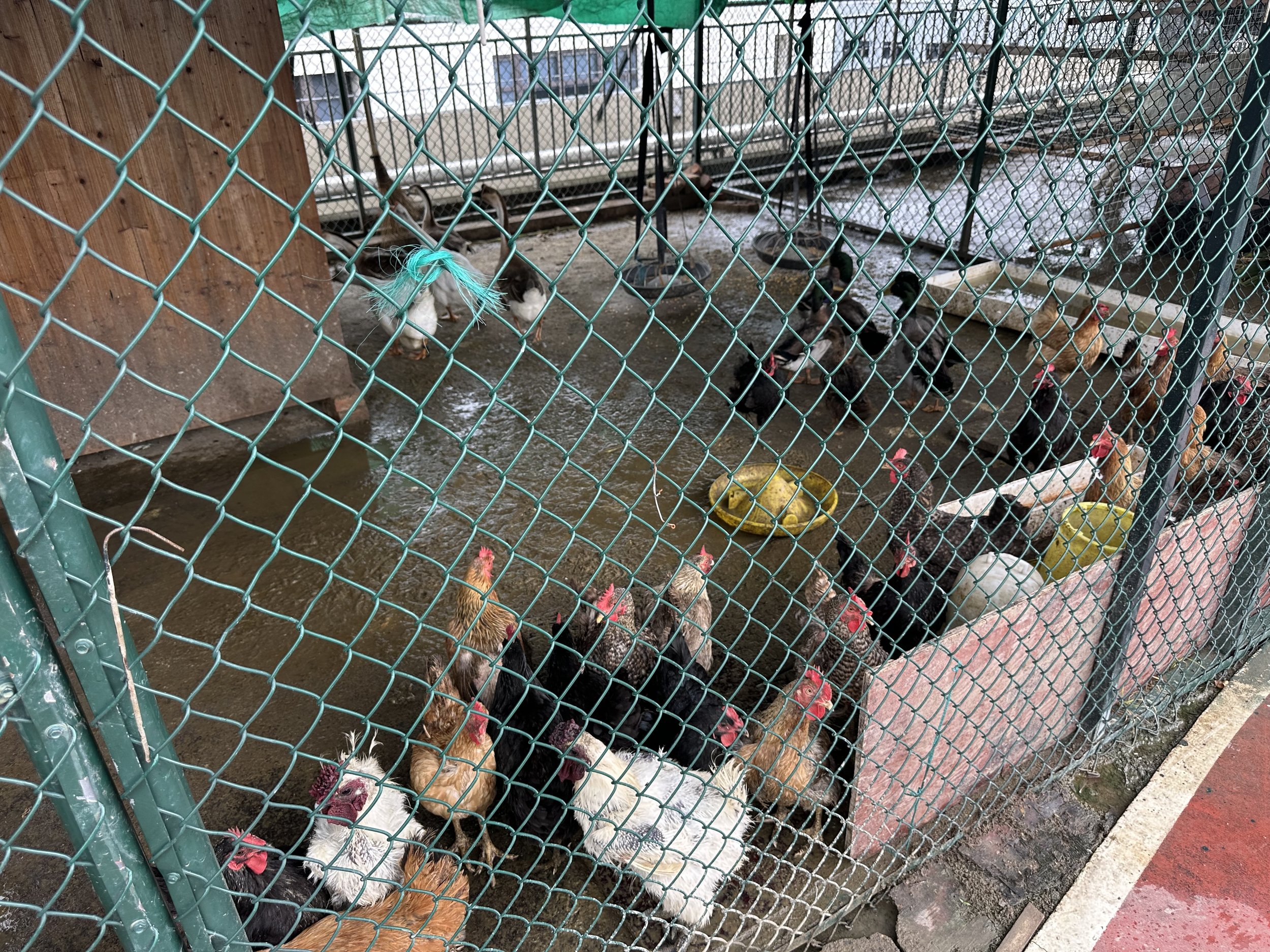
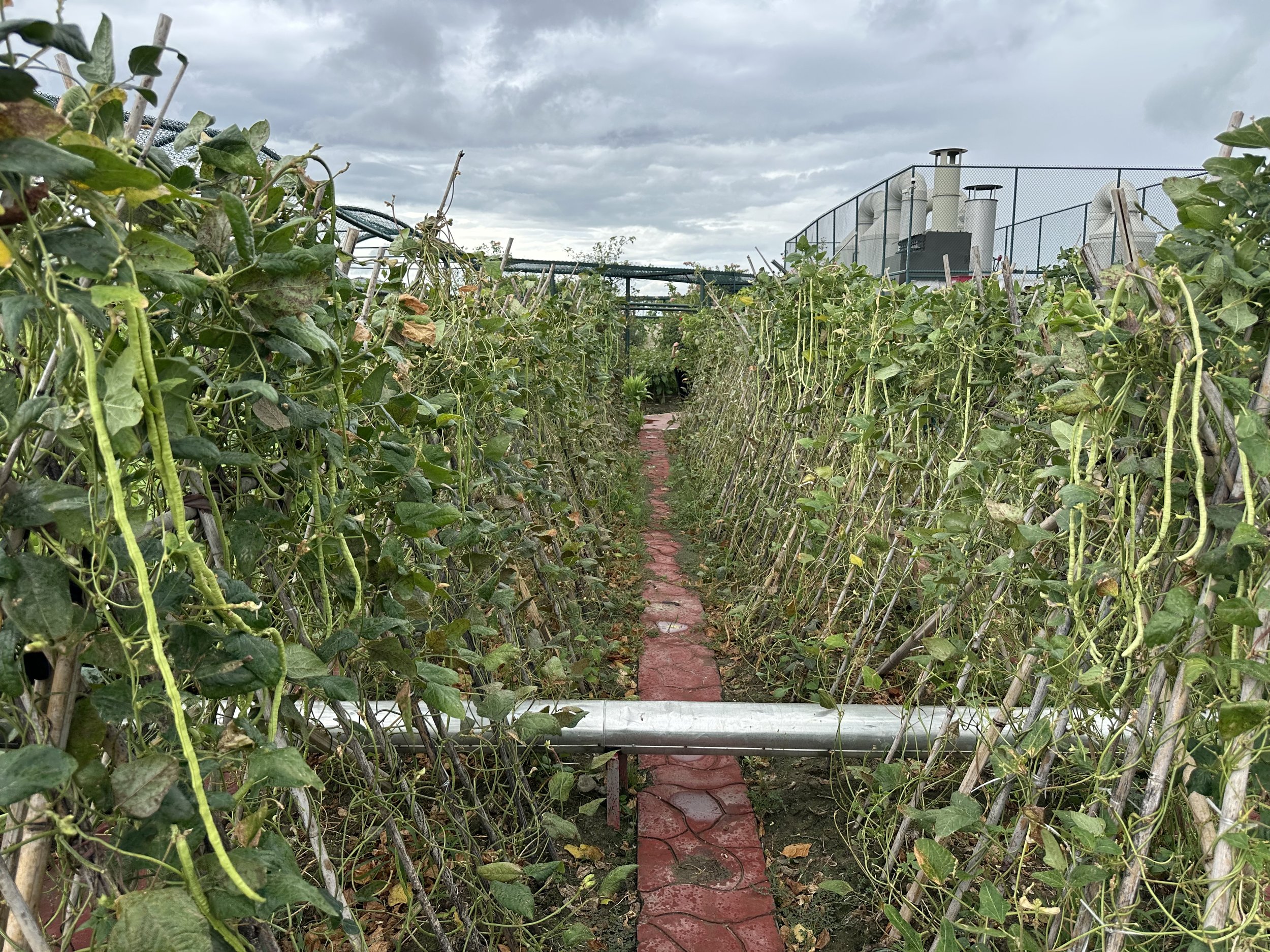
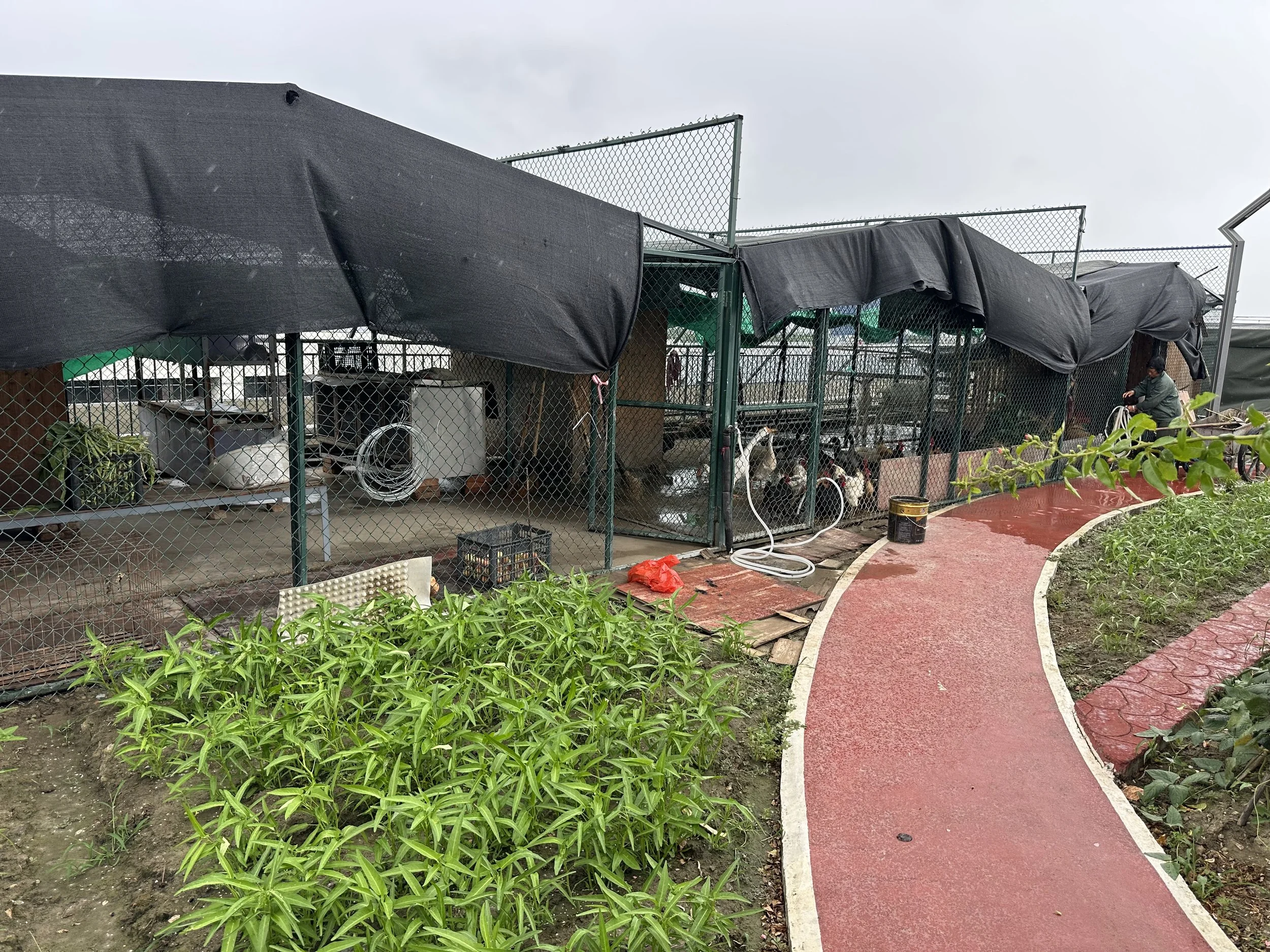
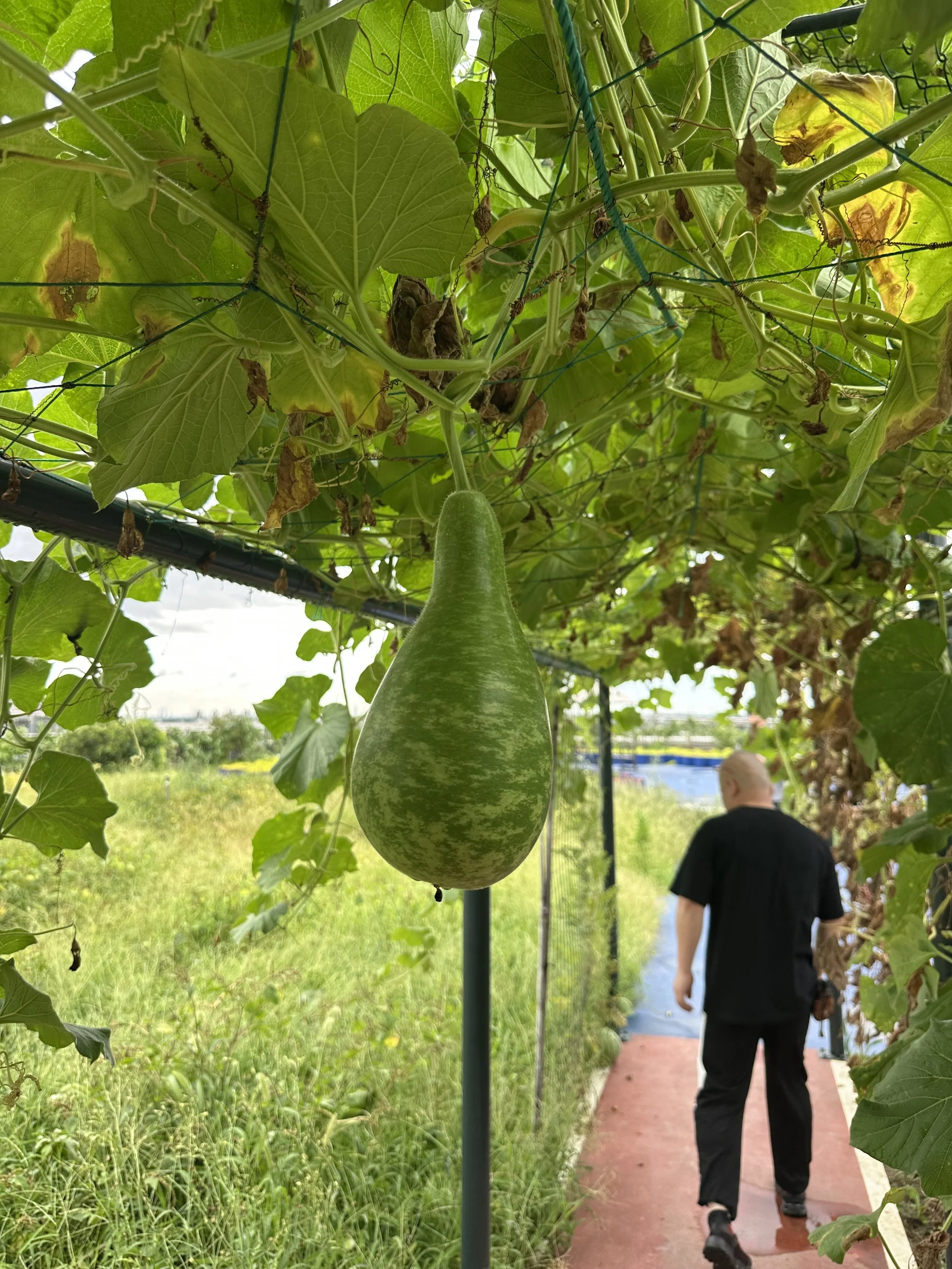
Mr. Dong, the founder of Knada and owner of the industrial park, tells people he mostly just tends to his gardens now, along with the three gardeners who nurture the fruits and vegetables and tend to the chickens, ducks, and goats who live five stories above the humming machines that Mr. Dong now leaves to others. He is especially proud of his peaches, which this region is known for. I had three for lunch, and then picked a fourth while touring the rooftop garden, so Mr. Dong could demonstrate the proper way of brushing the fuzz off on your trousers. I do not believe that I have ever before had a four-peach day, and he also gave me a cucumber to take back to my hotel.
I don’t know if this is intentional, but the fact that all the employees are free to pick from the gardens, and eat from them in their company cafeteria, surely influences the care with which the filters are maintained. Their plating line smells nicer than the ones I’ve smelled in the US, and the air in the garden is impeccable.
I’m sure there must be some dirty, polluting factories left in China, just as there are in the US. But this is not one of them, nor are any in this region. China decided to clean up, and precisely because of the nature of their government, when such a decision is made, it gets implemented. (Government is like any tool: whether it does good or evil, helps or hurts, is less about the details of its structure and more about the competence and intentions of the people who run it.)
So what is one to make of a factory like this? What do the garden fences around the machines, the gardens above, the party boats all mean?
The Era of the Founder
The unique spirit of the GUEagle/Knada factory means that this place is stamped with the imprint and unique personality—they’re fun guys—of the men and women who built it from nothing. It is in the era of the founder, which is something you can say about a lot of Chinese companies, and not nearly as many American ones.
Of course I’m speaking in broad strokes, but overall this country is young at heart in a way that the US hasn’t been, in the sphere of making physical things, since the heyday of the automobile industry. Great companies and vast factories built by strong-willed, opinionated, and fearless people who take chances and move mountains and plant gardens because it is their will to do so, not because the board believes it would increase shareholder value.
Can you imagine the bean counters at a private equity-owned manufacturing company approving a substantial plantation of beans to go along with the rooftop goats? And if they did put a garden on the roof, it would be as part of some kind of cynical greenwashing campaign, and no one would eat the beans.
China is delightfully infused with the spirit of people having ideas and turning them into companies, and then running those companies with the goal of making the best possible stuff, and growing, and having loyal employees and ducks on the roof if that’s what they want.
We in the US have had that spirit at different times and in different places. During the industrial revolution the eastern seaboard teamed with new machines, new inventions, new companies, new fortunes made and lost and made again. Mid-century Detroit was a vast expanse, an integrated industrial zone, of companies of every size who built race cars on the side, not because their advertising executives calculated that the exposure would be worth the cost, but because the people in charge wanted to see how fast they could make a car go—and they wanted to win.
Most recently, the semiconductor and software business that turned silicon valley from horse farms and orange groves into plush corporate campuses was, for a time, dominated by companies in the era of the founder. Steve Jobs most famously bet the company more than once on ideas that everyone else thought were insane, but he knew were insanely great.
Unfortunately in many companies there is now a stifling sense of impropriety around the idea of doing something because it’s a cool idea you really care about, and that just might change the world. Will it help my departmental metrics this year? Will the shareholders be happy? Will I get in trouble with the board if this idea fails?
Would you rather work for a company run by bean counters, or one where they bag the beans growing on their roof without counting them? Which kind of company do we need more of?
We all know we have a problem
We know that we have a problem with manufacturing in America. It’s not going to get solved by finance bros at big companies and investment funds: they are the ones who created the problem in the first place. It’s going to get solved by founders who start companies and build them into world-class forces of nature, conjuring up new industries and restarting old ones.
In building these companies, we could do well to look to the best examples worldwide, and right now a lot of those examples, including GUEagle and KNADA, are in China. Of course this isn’t because of any inherent difference in the people here or there: people are people. It’s due to a difference in historical phase. They are in the phase we were in during the industrial revolution, during the heyday of the automobile industry, and in whatever phase we’re going to be in next time the wheel turns and we become again a world-leading center of manufacturing.
How is that going to happen? We’re going to make it happen. We’re going to take the best the world has to offer—the best raw materials, the best machine tools, the best talent, and maybe some AI mixed in—and assemble it into the best companies. Laser cutters are a great example of something we can take and run with.
Of course laser cutters are just one kind of tool, but they are uniquely powerful for a number of reasons, and uniquely suited to re-invigorating a manufacturing industry. They are sometimes lumped in with the “maker” movement suite of tools, whose flagship tool is the 3D printer. This is a mistake.
3D printers are never going to be more than either (a) toys or (b) highly specialized tools for manufacturing exotic parts that can’t be made in any better way. But laser cutters are workhorses. They fit right in to the dirtiest, grittiest heavy industry and go about making things better. They are fast and powerful: a 3KW fiber laser can cut 1/8” stainless steel faster than my CO2 machine can cut 1/8” acrylic. A 20KW unit can cut two-inch carbon steel. And they go up from there.
Decades ago I had the opportunity (which I thankfully avoided) to bid on an automated sheet metal cutting table at a rusting maker of cement batching plants going out of business. It had a bed of maybe 5 feet by 10 feet with a gantry and head that could move an oxy-acetylene torch across that area, automatically cutting inch-thick steel plate into complex shapes.
The most remarkable thing about this machine is that it not only predated lasers and plasma cutters, it literally computers. It was not a CNC (Computer Numerical Control) machine like every similar machine you can buy today. Instead it had a sort of drafting table on the side, with a photocell-based optical follower. You would lay out a black-and-white print with the lines you wanted it to cut, and it would follow the lines on the paper, magnifying them like a giant electronic—but not computerized—pantograph.
I give this example only to say that serious industries have been doing what laser cutters do for a long time. Laser cutters just do it better.
If you have a laser cutter you can cut pretty much any 2D shape you want. If you also have a welder you can make an incredibly wide range of things out of metal. Add a press break for bending and you have a powerful metal fabrication shop right there with just three major tools.
(I would be remis not to say that your cutting solution does not have to be a laser cutter. It could be a plasma table instead. But I’ve used a plasma table enough to know how dirty and annoying they are. Laser is the way to go if the material is suitable.)
There is another way in which GUEagle is a model for the kind of company we need to build more of in this country. After long experience of the opposite, I have decided that I really only want to do business with people with whom there is no need of a detailed written contract. People who, after years of trust-building, you know—deeply know—that if there is a problem, it will get worked out fairly and equitably, because we all want to keep working together and grow towards a bigger and better future.
I heard Jenson Huang on a podcast say that there has never been a written contract between NVIDEA and TSMC, despite the fact that they have done literally trillions of dollars of business with each other over many decades. That’s an inspiring antidote to people who say, “always get it in writing”. I say, “if you think you need to get it in writing or you’ll be cheated, find someone else to work with”.
Having accompanied Daniel on visits to many of his customers—in China, in California, and in Mexico—I can see the way he practices this ethos. I mean, I’m sure there are written terms, prices noted so there is no misunderstanding, etc. But that’s very different from a 20-page hyper-legalistic contract that one side or the other can threaten to enforce to the detriment of the other.
What I see instead is relationships going back decades in which each side treats the other as a valued partner. (Daniel first met Alex, his salesperson in Mexico, when Alex was a child playing around the GUEagle laser cutters in his dad’s leathergoods factory.)
I think this way of doing business goes hand-in-hand with building genuinely good businesses. His partnerships with customers, resellers, representatives, and employees is trust-based and relationship-based. Maybe it’s just because I’ve recently come off a dysfunctional business relationship with a practitioner of the other kind of business that I find it so delightful and refreshing to see business done the right way, with peaches on the roof and cucumbers for everyone.